Case Study: 20 Flatbed Semi Trailers for Ethiopian Construction Corridor
Ethiopia’s construction sector, driven by industrial-park expansion and the Hawassa-Adama-Modjo corridor, is the largest single source of flatbed semi-trailer demand in the Horn of Africa. In 2025, a private logistics operator based in Modjo needed 20 flatbeds in a single batch to serve cement, steel coil, and bagged-cargo distribution.
Procurement scale: 20-unit batches are unusual in Ethiopian logistics because most operators add trailers in 3-5 unit increments. This procurement consolidated three operating companies under a single PO.
1. Buyer Profile
Region: Modjo, Adama, Hawassa industrial corridor
Operation: intermodal haulage between cement plants, steel service centres, and construction sites
Consolidated three operating companies under a single fleet renewal budget
Decision driver: cascade three brands of older flatbeds (Indian, used European, and a few Chinese) into one uniform fleet
2. Tender Specification
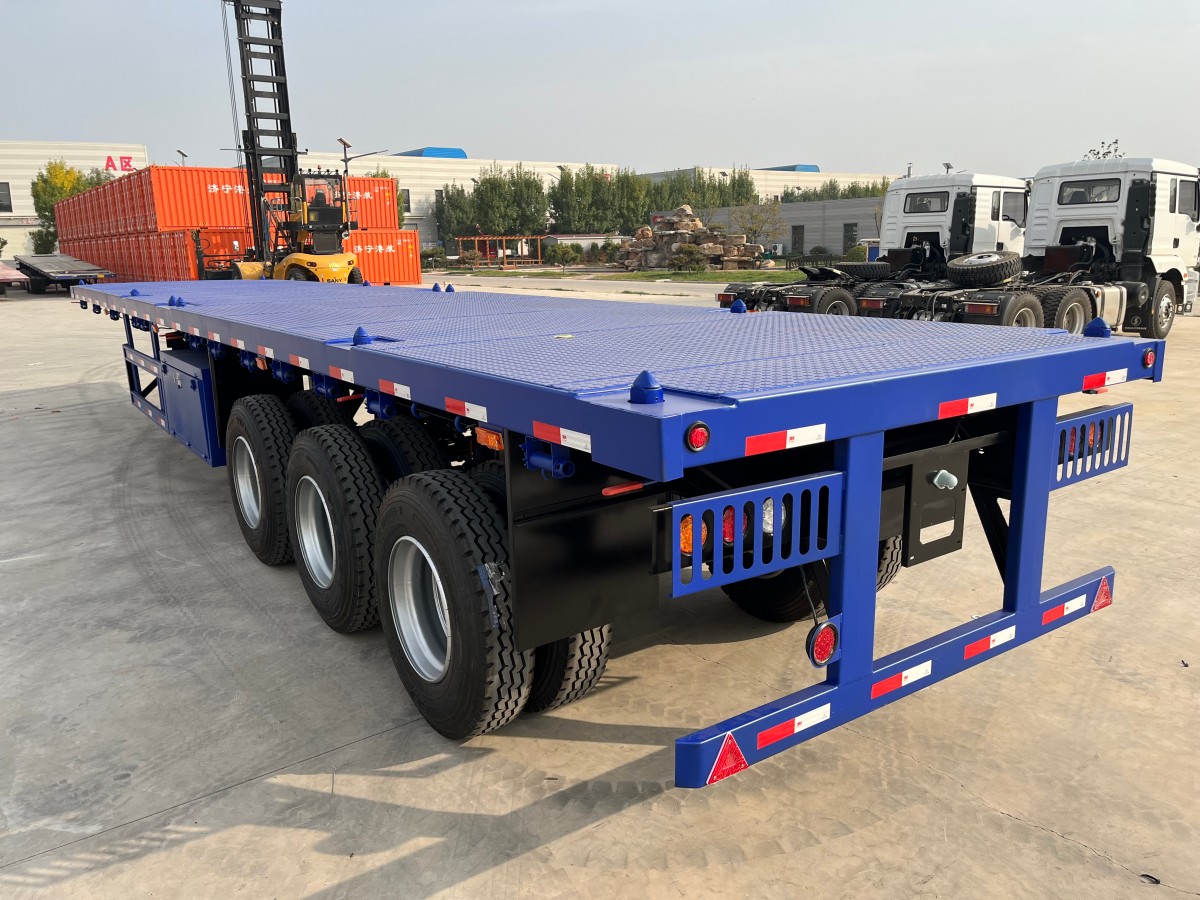
Payload: 50 ton rated
Deck: 12.5 m straight deck, no gooseneck drop (flatbed, not lowbed)
Axles: 3 × FUWA 13-ton mechanical
Suspension: mechanical leaf spring (cost-priority for highway use)
Twist locks: 12 ISO standard for one-trip and standard container handling
Tires: 12R22.5 with spare
Kingpin: 90#
Body: load-bearing side rails, classic flatbed, no drop sides
3. Procurement Process
Vendor comparison (4 weeks): 8 Chinese flatbed manufacturers reviewed, 3 visited in Liangshan. Comparison matrix based on price, lead time, and after-sales documentation quality.
Spec agreement (2 weeks): one round of revisions to align twist-lock count and spare-tire bracket design with Ethiopian road conditions.
Bulk shipping: 20 units RoRo from Tianjin to Djibouti (Ethiopia has no seaport) with inland transit Djibouti → Modjo (~$3,000 per unit overland).
Inspection: 1 inspector on site for 6 days, sampled 4 of 20 units for full inspection.
4. Cost Breakdown (Indicative)
Line
USD per unit
3-axle flatbed FOB China (50-ton)
~22,800
Sea freight Tianjin → Djibouti
~3,800
Inland transport Djibouti → Modjo
~3,100
Insurance + commissioning
~700
Landed cost, per unit
~30,400
5. After-Sales Performance (14 months in)
Mean uptime: 95.2% (modjo-to-Hawassa round trip is 600 km, 3 trips/week average)
Warranty claims: 4 kingpin greasing issues, 2 axle bearing replacements, all minor
Operating feedback: cab-stability at 80 km/h acceptable on the new Addis-Adama expressway
Twist-lock cycling: 200+ cycles in first year, no cracking observed
6. What Worked
Standardising one spec across 20 units eased driver training and reduced spares inventory cost by ~40%
RoRo shipping was faster than container — 35 days total port-to-port vs 50+ for container
FUWA mechanical axles are adequate for highway use; the buyer deliberately avoided BPW (cost saving of ~$1,500/unit, accepted given highway-only profile)
7. Lessons for Future Buyers
Plan Djibouti port handling in advance — congestion at Doraleh container terminal routinely costs buyers 5-7 days of free storage
Specify the spare-tire bracket for Ethiopian road vibration — most stock brackets crack under prolonged use; reinforced versions are inexpensive
For container-compatible flatbeds, request 12 twist locks rather than the lower-cost 8 — extra locks reduce one-trip container handling time
Document photographic QA for each unit — Djibouti port handling rarely provides damage recourse unless trailering photos are pre-cleared
FAQ
What is the standard flatbed semi-trailer size?
Standard 3-axle flatbed semi-trailers measure about 12.5 m long × 2.5 m wide × 1.5 m high (deck height). Payload ranges 40-60 tons. 4-axle versions extend to 13.6 m and 70-ton payloads.
Can a flatbed carry containers?
Yes, with twist locks. A 12.5 m flatbed will accept one 40-ft container or two 20-ft containers. Skeletal container chassis (skeletal trailers) are purpose-built for containers and lighter for the same load.
What is the difference between a flatbed and a lowbed?
Flatbed has a flat deck at standard height, ideal for general cargo and containers. Lowbed has a dropped deck for taller cargo and heavy equipment. Flatbed is cheaper; lowbed is needed for machines and tall loads.
How long does delivery take from China?
For Ethiopian destinations, expect 8 weeks production + 5 weeks shipping + 2 weeks overland. Total project lead time is roughly 15 weeks.
For project enquiries, fleet quotes, and tender support, contact postmaster@trailerintl.com. This case study is published by a manufacturer exporting 5,000+ semi-trailer units annually to 40+ countries.