Case Study: 12 Skeletal Container Chassis for Ghana Port Operations
Tema Port is West Africa’s largest container gateway, handling over 1 million TEU per year. In 2025, a private haulage operator working the Tema port-and-inland corridor needed to refresh a worn skeletal chassis fleet and consolidate on a single spec.
Note: 12-unit chassis orders for Ghana port operations are a common fleet renewal threshold — typical port-side operators replace chassis in 10-15 unit batches every 4-5 years.
1. Buyer Profile
Region: Tema, Greater Accra region, with inland runs to Kumasi and Tamale
Operation: drayage between Tema port and inland container depots
Existing fleet: 14 older chassis of mixed age and spec
Decision driver: standardise on 1 spec to reduce spare parts inventory cost
Twist locks: 12 × ISO standard, with 45 ft capability
Axles: 3 × BPW 12-ton
Suspension: mechanical leaf spring with helper ram
Tires: 12R22.5 tubeless
Kingpin: 50# for terminal tractor compatibility
Landing gear: 25-ton two-speed
3. Procurement Process
Spec consolidation (2 weeks): aligned three previously different specs from three drivers into a single tender.
Manufacturer shortlist (3 weeks): 4 Chinese manufacturers reviewed. Two visited in Liangshan, one visited in Wuhan.
Bulk order: 12 units in single PO for volume discount.
Sea freight: RoRo China → Tema (35 days), inland transport not required (Tema port to buyer’s yard = 12 km).
4. Cost Breakdown (Indicative)
Line
USD per unit
Skeletal chassis FOB China (3-axle, BPW)
~14,800
Sea freight China → Tema
~3,200
Insurance + commissioning
~400
Landed cost, per unit
~18,400
5. After-Sales Performance (10 months in)
Mean uptime: 96%
Warranty claims: 1 twist lock mechanical failure (replaced under warranty, spare part shipped in 10 days), 2 landing gear seal kits
Operational feedback: BPW 12-ton is the right size for 40-ft high-cube containers — under-rated 10-ton axles are a common spec error
6. What Worked
Single-spec procurement reduced spares inventory by ~55% compared to the previous 3-spec fleet
BPW axles carried the Ghana road profile well — Tema to Kumasi is 250 km, much of it under-maintained trunk road
50# kingpin (rather than 90#) is the right choice for terminal-tractor operations; spec error to avoid
7. Lessons for Future Buyers
Twist locks are wear items — keep 4 spare locks in the first shipment
Spec 12.00R20 tires for Ghana if the route includes rough shoulder sections — 12R22.5 cuts on bad tarmac edges
Terminal-tractor operators should confirm kingpin size at the spec stage, not after delivery
FAQ
What is the difference between a skeletal trailer and a flatbed?
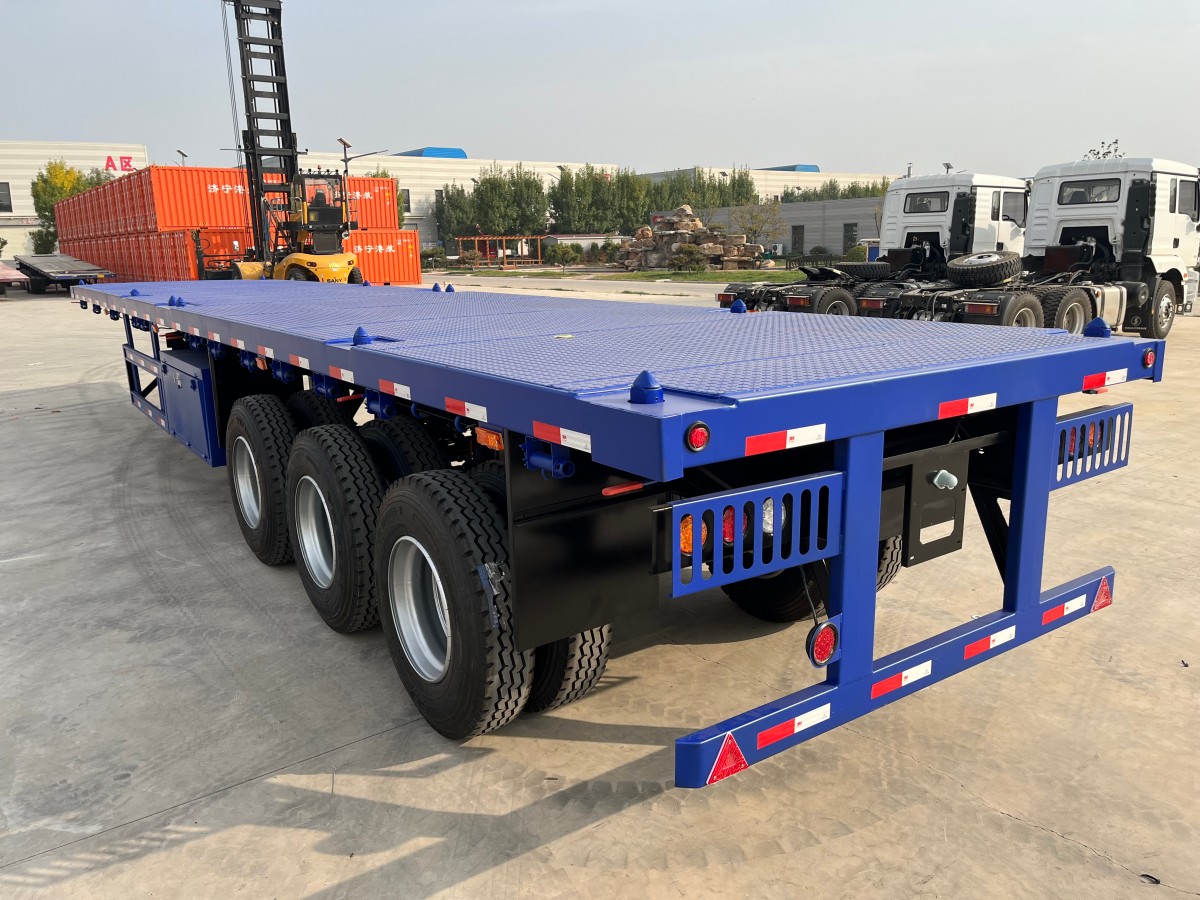
A skeletal trailer (also called container chassis) has only the frame with twist locks, no deck. It is purpose-built for ISO container transport. A flatbed has a full deck and can carry containers (with twist locks) or other cargo. Skeletal chassis are 1.5-2 tons lighter than equivalent flatbeds, allowing more payload.
How many twist locks does a 40-ft chassis need?
Twelve locks for a 40-ft universal chassis: 4 corner + 4 mid-side + 4 corner-extension for 45-ft capability (locks can be flipped out of the way when not needed). Eight locks (no mid-side locks) is lower cost but lacks 45-ft flexibility.
What is the typical payload of a 3-axle chassis?
3-axle 12-ton chassis typ payload 35-40 tons. Suitable for 40-ft high-cube containers fully loaded.
Why BPW over cheaper Chinese axles?
BPW axles have better kingpin alignment tolerance, longer service intervals, and broader African service coverage. The 12-15% cost premium is recovered through uptime in port operations.
For project enquiries, fleet quotes, and tender support, contact postmaster@trailerintl.com. This case study is published by a manufacturer exporting 5,000+ semi-trailer units annually to 40+ countries.