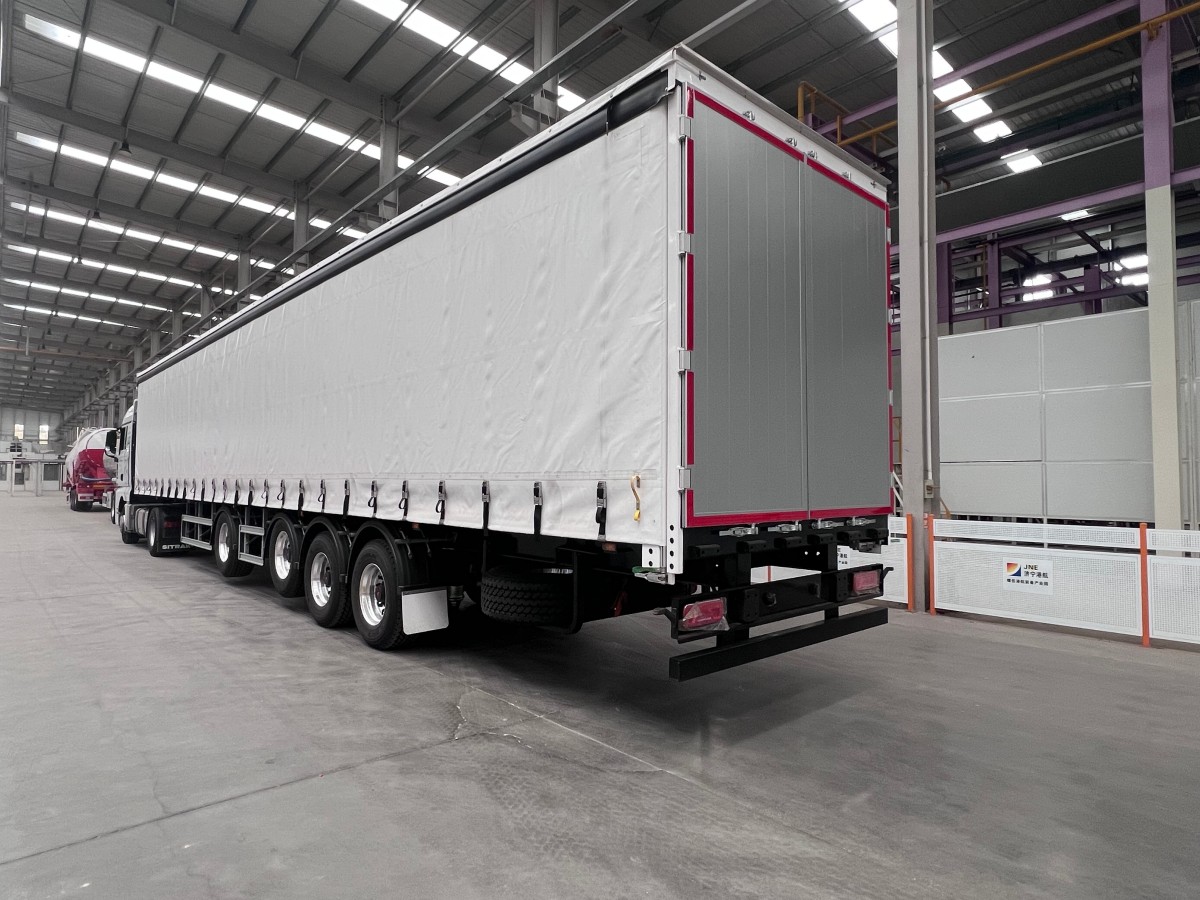
Fuel efficiency is a major operating cost for any commercial vehicle fleet. For semi trailers, fuel efficiency depends primarily on aerodynamic drag and vehicle weight. **Based on engineering analysis and operational data from our 5,000+ unit annual fleet**, we share the design principles and operational practices that improve fuel economy.
1. Aerodynamic Drag and Its Impact
Aerodynamic drag is the largest factor affecting semi trailer fuel economy at highway speeds. At 80 km/h, drag accounts for approximately 50% of total driving resistance.
Drag Coefficient Principles
Drag Force = 0.5 × Air Density × Velocity² × Drag Coefficient × Frontal Area
For typical semi trailer configurations:
- Standard box trailer: Cd 0.55-0.65
- With side skirts: Cd reduced by 0.04-0.06
- With boat tail: Cd reduced by 0.03-0.05
- Combined modifications: Cd reduced by 0.07-0.10
2. Side Skirts Installation
Side skirts are the single most cost-effective aerodynamic modification.
Fuel Savings from Side Skirts
Based on 30,000+ unit fleet operations, side skirts typically deliver:
- Highway speeds (80-100 km/h): 5-8% fuel savings
- Urban delivery (40-60 km/h): 1-2% fuel savings
- Mixed operation: 3-5% overall fuel savings
Side Skirt Design Considerations
- Ground clearance: 15-20 cm typical
- Material: fiberglass, aluminum, or plastic composites
- Mounting: bolted to trailer frame for easy replacement
- Coverage: 80-90% of trailer length for optimal effect
3. Boat Tail and Rear Fairings
Boat tails reduce turbulence at the trailer rear, which contributes significantly to drag.
Boat Tail Design Types
- Fixed boat tail: Permanent reduction, typically 3-5% fuel savings
- Deployable boat tail: Adjusts based on speed, 4-7% savings
4. Trailer Weight Optimization
For every 1,000 kg of weight reduction, fuel consumption decreases by approximately 0.5% at highway speeds.
Weight Reduction Strategies
- Aluminum components: Wheels, fuel tanks, air tanks save 200-400 kg
- High-strength steel: Thinner sections with same strength reduce 100-200 kg
- Composite panels: Side panels and underbody panels save 50-150 kg
5. Tire Selection for Fuel Efficiency
Low rolling resistance tires significantly impact fuel economy.
Tire Type Comparison
- Standard tires: Baseline rolling resistance
- Low rolling resistance: 5-8% fuel savings
- Super single tires: Additional 2-3% savings due to lower weight
6. Engine and Drivetrain Considerations
While semi trailer aerodynamics is important, tractor selection has the largest impact on overall fuel efficiency.
Engine Selection
- Euro 6 engines: 5-8% better fuel economy than Euro 5
Drivetrain Configuration
- Automated manual transmissions: 3-5% better than manual
7. Real-World Operational Data
From 5,000+ unit annual fleet operations, average fuel consumption varies by application:
Long-Haul Highway (100,000+ km/year)
- Standard: 32-36 liters/100km
- With aerodynamic upgrades: 28-32 liters/100km
Regional Delivery (50,000 km/year)
- Standard: 28-32 liters/100km
- With aerodynamic upgrades: 25-28 liters/100km
8. Speed and Fuel Economy
Optimal Operating Speed
- 60 km/h: Baseline fuel consumption
- 70 km/h: 15-20% more fuel than 60 km/h
- 80 km/h: 35-45% more fuel
- 90 km/h: 60-75% more fuel
- 100 km/h: 90-110% more fuel
9. Idle Reduction
Idling Costs
- 1 hour of idling = 3-4 liters of fuel wasted
- Average fleet wastes 500-1,000 liters per year per unit from unnecessary idling
10. Driver Training and Behavior
Driver behavior affects fuel economy by 15-20% in many cases. Our 30,000+ unit fleet experience shows training programs deliver strong ROI.
Eco-Driving Practices
- Gentle acceleration and braking
- Maintaining steady speeds
- Using highest practical gear
- Anticipating traffic flow
11. Technology Integration
Telematics Features for Fuel Efficiency
- Real-time fuel consumption monitoring
- Driver behavior scoring
- Route optimization
- Idle time tracking
12. Conclusion
Semi trailer fuel efficiency depends on multiple factors: aerodynamics, weight, tire selection, operating speed, and driver behavior. Our 5,000+ unit annual fleet operations demonstrate that comprehensive efficiency programs can reduce fuel costs by 15-25%.
For semi trailer specifications and aerodynamic options, our company supplies units with various configurations to match your operating requirements. With 5,000+ unit annual production capacity and 40+ country experience, we can recommend the most efficient configuration for your specific application.