Loading ISO containers onto semi trailers is one of the most critical operational tasks in intermodal logistics. Done incorrectly, it leads to cargo damage, equipment failure, and serious safety risks. Done correctly, it enables efficient port-to-door transport that the global container shipping industry depends on. **As a manufacturer and logistics partner handling over 5,000 container shipments annually to more than 40 countries**, we have seen what works and what does not work in real-world container loading operations.
1. ISO Container Specifications and Compatibility
Before loading, verify container compatibility with the trailer. The most common configurations are:
- 20ft container: Standard ISO 20ft, ~2,200 kg tare weight, up to 28,500 kg payload
- 40ft container: Standard ISO 40ft, ~3,700 kg tare weight, up to 26,800 kg payload
- 40ft High Cube (HC): 1ft taller (9’6″ instead of 8’6″), allows taller cargo
- 45ft HC: Less common, requires 45ft compatible chassis
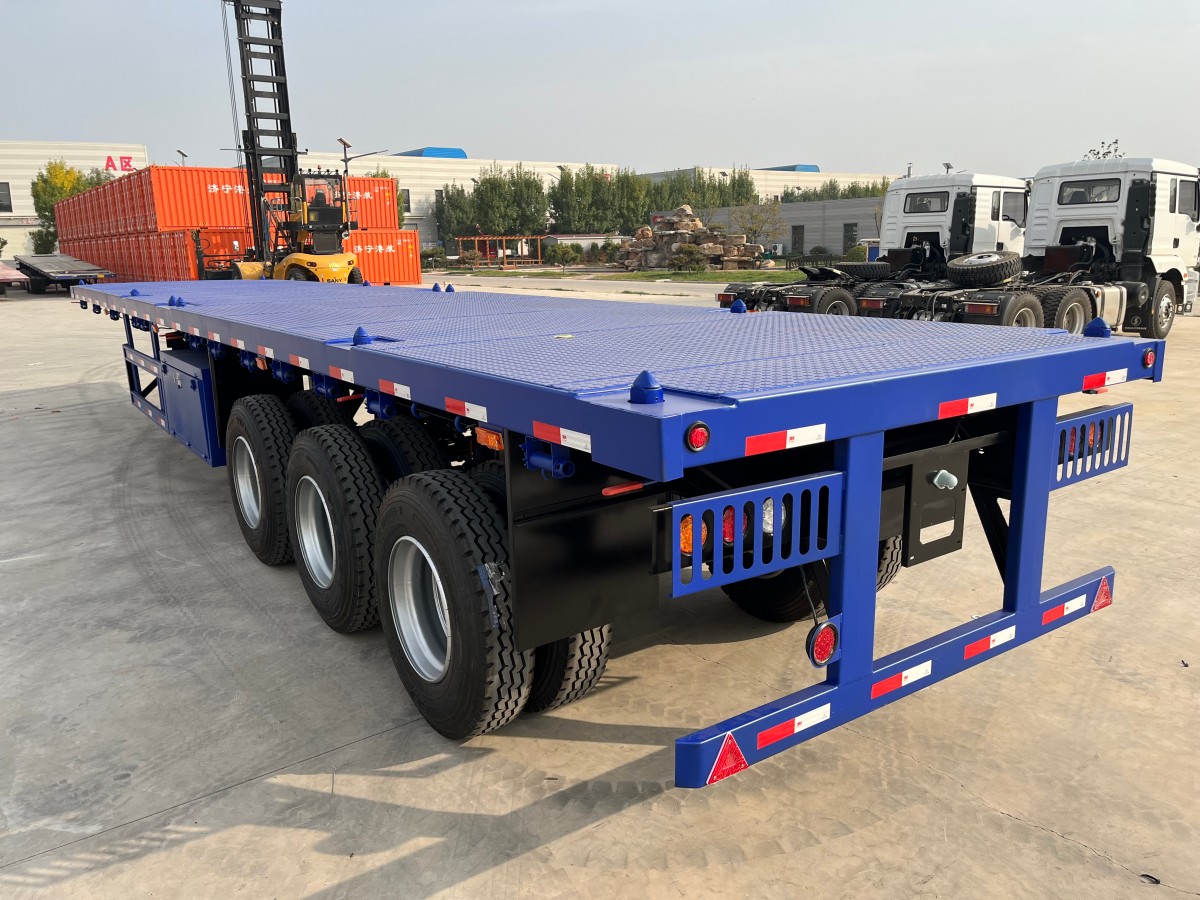
Verify your trailer is rated for the specific container size and weight you plan to load. Skeletal chassis (without flatbed) should be used only with 20ft or 40ft ISO containers.
2. Pre-Loading Inspection
Before any container is loaded, perform a systematic check of the trailer and loading equipment.
Trailer Inspection Points
- Twist locks: All 4 (for 20ft) or all 12 (for 40ft) twist locks must be in unlocked position and functioning properly. A seized twist lock can prevent proper securing and cause serious safety risks.
- Twist lock base condition: Inspect for cracks, corrosion, or deformation. The castings welded to the chassis must be intact and the locking mechanism must engage fully.
- Tires and suspension: Verify proper inflation, no visible damage, and correct load rating for the planned cargo weight.
- Brake system: Test air pressure and brake function before any loading operation.
Container Inspection Points
- Corner castings: All 8 (or 10 for 40ft HC) corner castings must be intact with no cracks or excessive wear
- Doors: Operate smoothly, close fully, and lock properly
- Floor: Clean, no protrusions, no water damage, and rated for cargo weight
- Weight distribution: Confirm actual cargo weight including packaging and dunnage
3. Loading Procedures
For 20ft Containers
- Position container with twist lock corners aligned to trailer twist lock bases
- Lower container straight down using crane or reach stacker (no swing set during placement)
- Engage all 4 corner twist locks first, then verify with visual inspection
- Apply secondary safety devices per local regulations
For 40ft Containers
- Position container with all 4 corner castings aligned to corresponding twist lock bases
- Check that middle twist lock positions align with container center castings
- Lower container straight down with no lateral movement
- Engage 4 corner twist locks first
- Engage 4 middle twist locks next
- Engage 4 remaining corner twist locks (4 corners + 4 middle = 8 minimum for 40ft)
- Verify all 12 twist locks (4 corners + 4 middle + 4 corners opposite) are fully engaged
- Perform final visual inspection from all sides
4. Securing and Safety Standards
International Standards (CSC / ISO)
The Container Safety Convention (CSC) plate on every ISO container confirms the container has been inspected and is approved for transport. Despite the CSC plate, the safety of the loaded container on the chassis remains the responsibility of the carrier and loader.
Securing Methods
- Twist locks only: Minimum acceptable for most regions; verify all locks are fully engaged
- Twist locks + chains: Required in some regions (e.g., EU) for additional security
- Twist locks + straps: Used for high-value or high-risk cargo
- Twist locks + rods: For sensitive cargo requiring extra security
5. Common Loading Mistakes to Avoid
Across 5,000+ container shipments handled annually by logistics operations in our network, the most common errors are:
Operator Errors
- Incomplete twist lock engagement: Operator does not fully rotate the lock, leaving the container partially unsecured
- Skipping the visual check: After mechanical engagement, always confirm visually that each lock is closed
- Loading on twisted chassis: Container misalignment causes uneven load distribution and stress on locks
Equipment Errors
- Worn twist locks: Locks past their service life fail to engage properly
- Damaged corner castings: Cracked container castings cannot be properly secured
- Improper load distribution: Overloading one end of the trailer causes handling problems
6. Special Cargo Considerations
For non-standard cargo, additional procedures apply:
Refrigerated (Reefer) Containers
Ensure generator set is functional and fuel is adequate. Verify genset mounting on chassis and exhaust routing. Test refrigeration unit before departure.
Tank Containers (ISO Tanks)
Requires specialized chassis with twist locks rated for tank weight. Pre-load inspection must include tank integrity, valves, and any hazardous materials documentation.
Oversized or Non-Standard Cargo
May require special permits, route surveys, and escort vehicles. Coordinate with relevant authorities well in advance.
7. Quality Control for Container Loading Operations
Operations handling 5,000+ container shipments annually typically implement the following controls:
- Pre-departure checklist: Every container loading is verified by a second operator
- Twist lock condition monitoring: Daily inspection and periodic replacement schedule
- Operator training: Annual recertification for all loading personnel
- Incident reporting: Document and analyze any loading incidents
Conclusion
Container loading is straightforward when done correctly and with proper equipment. The risks come from shortcuts, worn equipment, and operator error. Operations that prioritize proper training, equipment maintenance, and standardized procedures can handle tens of thousands of container shipments per year with minimal incidents.
For operations seeking reliable semi trailer chassis for container transport, we provide a range of 20ft, 40ft, and 40ft HC compatible chassis with proper ISO 1161 twist lock systems. Our operations support container logistics across 40+ countries with over 5,000 container shipments annually.