Understanding how a flatbed semi trailer works is essential for anyone involved in freight transport. As a manufacturer exporting over 5,000 units annually to 40+ countries, we explain the complete mechanics of flatbed trailer operation.
1. What Makes a Flatbed Trailer Work
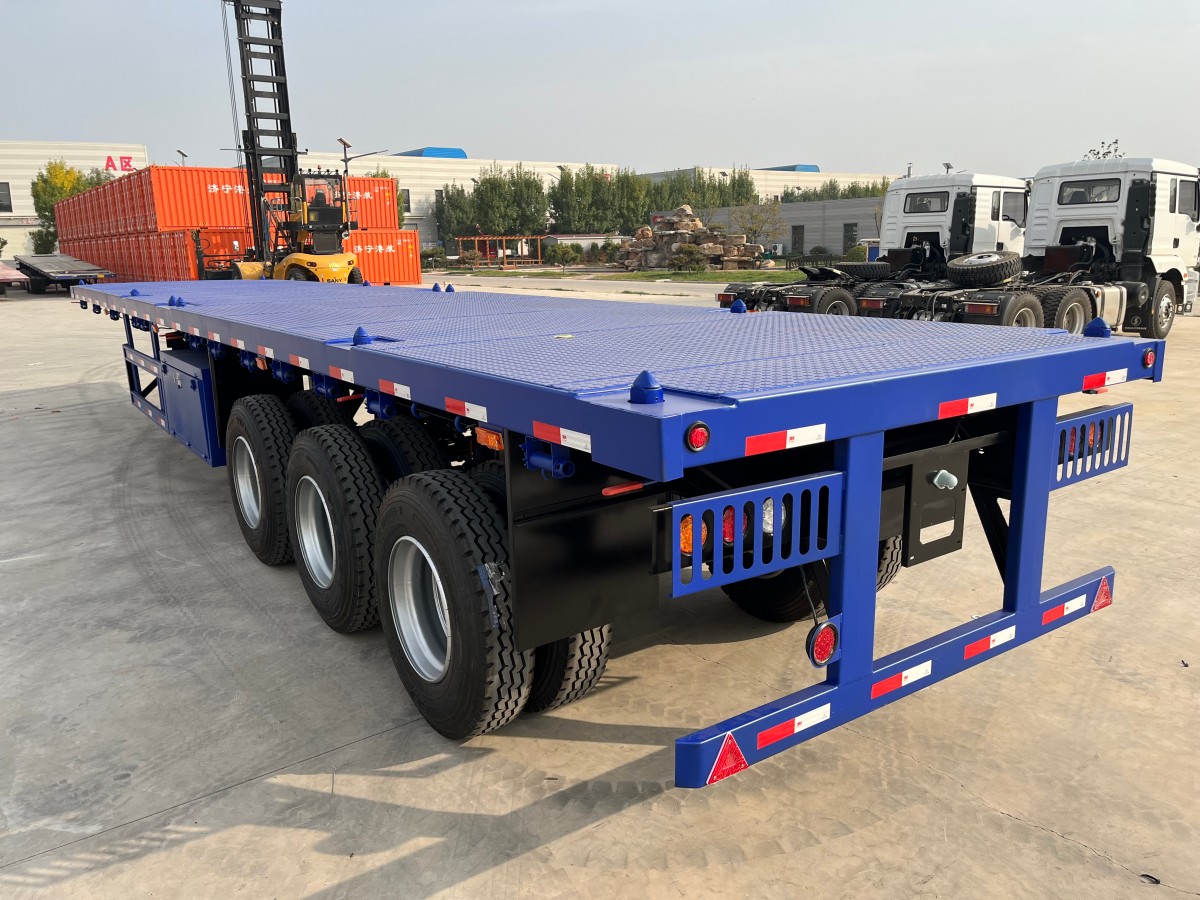
A flatbed trailer consists of a steel frame with a flat platform deck, mounted on axles with suspension and brakes. The key components work together to carry cargo safely over long distances.
Core Components
- Main beam (I-beam structure running length of trailer)
- Deck platform (3mm checkered steel plate)
- Cross members (support deck, spaced every 400-600mm)
- Axles with suspension and brakes
- King pin (connects to tractor fifth wheel)
- Landing gear (supports trailer when disconnected)
2. Loading a Flatbed Trailer
Loading a flatbed trailer is one of its main advantages over enclosed trailers – cargo can be loaded from any side or from above.
Common Loading Methods
- Forklift from the rear
- Crane from above (for heavy machinery)
- Reach stacker for containers
- Drive-on ramps for vehicles and equipment
Weight Distribution
Proper weight distribution is critical for safe transport. The load should be centered and distributed to stay within legal axle weight limits.
3. Securing Cargo
Cargo security is the most important operational aspect. Unsecured cargo causes accidents, damage, and regulatory violations.
Securing Methods
- Ratchet straps (most common)
- Chains and binders (for heavy equipment)
- Edge protectors (prevent strap damage)
- Blocking and bracing (for irregular loads)
Securing Standards
In the US, FMCSA requires cargo securing to withstand 0.8g forward deceleration. Similar standards apply in EU and other regions.
4. Transport Dynamics
Once loaded and secured, the trailer becomes part of a tractor-trailer combination with specific handling characteristics.
Dynamic Considerations
- Roll stability (weight distribution affects cornering)
- Brake balance (trailer brakes work with tractor)
- Suspension response (load affects ride quality)
- Wind effect (high-profile loads more affected)
5. Unloading
Unloading a flatbed is straightforward but requires care to avoid damage.
Common Unloading Methods
- Forklift from the rear
- Crane from above
- Drive-off ramps for vehicles
- Manual unloading with material handling equipment
6. Flatbed Trailer Maintenance
Proper maintenance extends trailer life and prevents accidents. Our 30,000+ unit fleet operations follow these practices:
- Daily: tire pressure check, brake test
- Weekly: deck inspection for damage
- Monthly: suspension and axle inspection
- Annual: full inspection including frame and welds
7. Flatbed vs Other Trailer Types
Flatbeds offer specific advantages over other trailer types:
vs Enclosed (Van) Trailers
- Flatbed: faster loading, handles oversized cargo
- Van: weather protection, security from theft
vs Container Chassis
- Flatbed: general cargo flexibility
- Chassis: container-only, lower tare weight
8. Common Flatbed Trailer Uses
Flatbeds handle diverse cargo types across industries:
- Construction materials (steel, lumber, concrete)
- Machinery and equipment
- ISO containers (with twist locks)
- Agricultural products (hay bales, equipment)
- Palletized goods
9. Choosing a Flatbed Trailer
Key specifications when choosing a flatbed:
- Deck length: 40ft standard, 45ft for container transport
- Payload: 40-60 tons typical for 3-axle
- Axle configuration: 2, 3, or 4 axles
- Suspension: mechanical or air
- Component brands: BPW, FUWA, JOST
10. Conclusion
Flatbed trailers are versatile, efficient, and widely used across industries. Understanding how they work helps operators maximize productivity and safety. As a manufacturer exporting 5,000+ units annually, we produce flatbeds to meet diverse global requirements.
Related Resources